
Skip to content

Best Guide on How to Unlock your AT&T iPhone

As it happens with many other mobile operators, AT&T’s phones have what is known as a carrier or SIM lock, this lock can be removed with SafeUnlocks in just a couple of minutes, keep reading to learn how to unlock your AT&T iPhone.

What Is AT&T?
What Is AT&T?
What Is AT&T?

AT&T is a pretty well-known American company in the telecommunications world, it offers a huge range of mobile networks that cover a lot of countries. It is present in Asia Pacific, Latin America, the Caribbean, North America, and EMEA (Europe, the Middle East, and Africa).

Even though AT&T offers a good service in general terms, however, people tend to need to switch carriers for different reasons (better prices, better plans, more covered areas, people who are traveling abroad, etc.) and it is kind of annoying to go through the unlocking process that AT&T and other carriers offer because they ask for a lot (That’s why SafeUnlocks is the best option when needing the unlock code).

How to Unlock your AT&T iPhone with AT&T Directly?
Does AT&T allow Carrier Lock Removals?

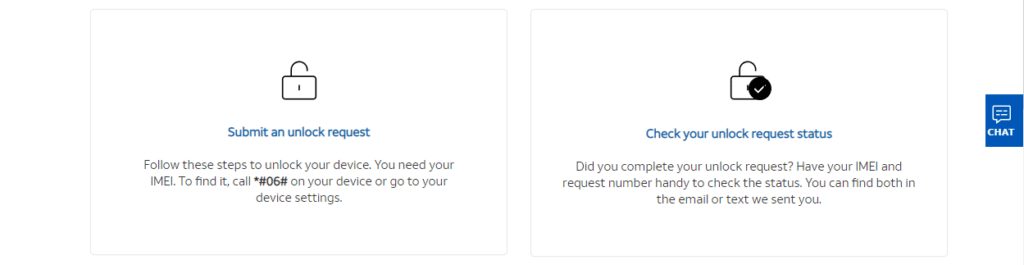
Unlocking your AT&T device is possible, and legal, and you can even ask them to unlock your phone, tablet, or mobile hotspot (and they should). The only thing is that making an unlock request with AT&T and carriers, in general, is a long process (usually takes up to two business days) that requires you to meet a lot of conditions, some of which are the following:

  • You need to be on good terms with AT&T (there cannot be unpaid bills).
  • If you took credit with AT&T to finance the locked device, you need to have fully paid for it.
  • There cannot be any lost or stolen report associated with the phone being unlocked.
  • You need to be the original owner.
  • You need to have had an active plan with them for at least a month (it depends on the contract you have, it is better if you call them to confirm).

If you meet those requirements, you can contact AT&T directly to ask them to provide you with the unlocking code needed. However, if you have a secondhand phone or don’t meet the conditions, your best option is to unlock your device with SafeUnlocks.

How do I place an Unlock Request with SafeUnlocks?
How do I place an Unlock Request with SafeUnlocks?

You can easily unlock your device with SafeUnlocks in minutes for $1 only, the unlocking process is safe, effective, permanent, and compatible with any smartphone (Android, iPhone, etc.); in addition, is available worldwide and the process is 100% online.

All you need is the phone’s IMEI number, a valid email address, the phone you want to unlock handy, the new SIM card you want to use, and about 30 minutes to complete the unlocking process. With SafeUnlocks you don’t need any technical knowledge, the instructions are pretty easy to follow and there are no eligibility requirements, so it doesn’t matter if you purchased a used phone.

If you want to start now, just click here to visit our online website and enter the required information to start the process and unlock your phone (remember that you will be asked to create an account if it is your first time using the service).

Is it Safe to Enter my Phone’s IMEI Number on SafeUnlocks Website?
Is it Safe to Enter my Phone's IMEI Number on SafeUnlocks Website?
Is it Safe to Enter my Phone’s IMEI Number on SafeUnlocks Website?

Entering the device’s IMEI number is necessary to complete the unlocking process with SafeUnlocks because this number functions as an identification, in fact, it is the number used to restrict a phone because it is unique for each device, so carriers can make sure all phones they are selling are being locked.

However, it is completely safe to enter your IMEI number to unlock your device, all processes are protected via SSL certificates (which encrypt all data managed on the unlocking tool) and via private accounts (the account with username and password you create at the beginning) to make sure anybody else has any access to your data.

In addition, you are never asked for any of your passwords or any private information because we made sure it is not needed to create the unlock code, so you can rest assured that you don’t have to give any Personal Identifiable Information (PII).

Finally, you can rest assured that all information related to a device is automatically deleted from the system as soon as the unlocking process finishes, so there is no private information stored on the website (which is where you unlock your phone at all times, you never leave the web page or install anything on your computer).

How to compare iPhone device lock

Phone “unlock” ads mix SIM locks, iCloud, FRP, PUK, and blacklist flags. iPhone device lock needs that split before you compare prices in 2026. SafeUnlocks is a comparison portal: we do not process a device unlock at checkout.

Write down the official unlock or recovery rules from iPhone before you open a third-party form. Eligibility, fees, and turnaround belong in that note. If a listing contradicts the published policy, treat the listing as the weaker source.

If you cannot show the IMEI and the lock screen, you cannot compare listings honestly. iPhone device lock depends on those two facts. /random-imei-generator-online explains IMEI structure; it is not a blacklist cleaner or a network release.

SafeUnlocks publishes comparison copy for “Best Guide on How to Unlock your AT&T iPhone.” We do not take payment to unlock a device, and we do not run a hidden shop behind this URL. If a form appears on the page, treat it as a path into a listed partner flow, then read the partner’s terms before you send an IMEI.

Skim the headings, then the related device lock guides. If a child page names a different country or brand than iPhone device lock, it is a sibling, not a translation of this URL. That is how the comparison set is organized.

iPhone hardware still uses the same lock families as other phones, but menus and official tools differ. For device lock in 2026, prefer steps that name this model line instead of a generic Android or iPhone screenshot.

A shop that sells one price for every lock type is not comparing the same job. iPhone device lock sits in the generic bucket. Cross-check the lock screen against that bucket before you treat a quote as relevant.

Ask every listing for iPhone device lock whether a finance hold or theft report blocks the job. A shop that will not answer that in writing is not a complete option on this comparison page.

Timelines for iPhone device lock are not one number. Official carrier or brand desks may take hours or several days. Blacklist and Activation Lock cases can sit longer because a third party owns the record. Any 2026 “five minute” claim should name which lock type it is talking about.

If the line still owes money, official desks will often refuse iPhone device lock. Third-party listings that ignore that sentence are selling a different job than the one on the lock screen.

Bookmark the official policy and your IMEI note, then use the device lock guides to move sideways. iPhone device lock is one node in that map, not a promise that every device in the family will qualify.

If you landed on /how-to-unlock-your-att-iphone from a country or brand that is not named in iPhone device lock, you are probably in the wrong leaf. Use the hub links rather than forcing this title (“Best Guide on How to Unlock your AT&T iPhone”) to cover a different lock.

Elementor leftovers can start at H2. The portal heading and this copy are the on-page H1 layer for “Best Guide on How to Unlock your AT&T iPhone.” They do not change the imported screenshots or forms; they add the comparison context those layouts omitted.

SafeUnlocks will not invent a publish timestamp for /how-to-unlock-your-att-iphone. Dates in schema come from WordPress listings, visible bylines, or the media folder year-month on images that already shipped with the page.

The slug how-to-unlock-your-att-iphone is how this 2026 URL is stored in the site map. Humans should read the title “Best Guide on How to Unlock your AT&T iPhone” and the subject line iPhone device lock. Search engines get the same lock label (device lock) in the heading and in this briefing so the page is not a thin Elementor shell.

Inbound links to /how-to-unlock-your-att-iphone should describe iPhone device lock, not a generic “click here.” This briefing exists so the visible copy on the URL is long enough and specific enough to stand without rewriting the imported HTML by hand.

If you landed on /how-to-unlock-your-att-iphone from a country or brand that is not named in iPhone device lock, you are probably in the wrong leaf. Use the hub links rather than forcing this title (“Best Guide on How to Unlock your AT&T iPhone”) to cover a different lock.

Elementor leftovers can start at H2. The portal heading and this copy are the on-page H1 layer for “Best Guide on How to Unlock your AT&T iPhone.” They do not change the imported screenshots or forms; they add the comparison context those layouts omitted.

SafeUnlocks will not invent a publish timestamp for /how-to-unlock-your-att-iphone. Dates in schema come from WordPress listings, visible bylines, or the media folder year-month on images that already shipped with the page.